A year has now passed since the end of my literary hiatus. After the embarrassing realization that I could count on one hand the number of books I'd read in the previous five years (or more?), I grew determined to improve that figure in 2009. Not for bragging rights, I assure you, but because I began to recall the positive influence literature could have in my life if I allowed it. The rediscovered desire to read only solved part of the problem, however, as my careful research revealed that a genuine deficiency of spare time would place a burden on the ambition.
The year started off with great momentum, where I finished the four books in the Twilight series in about as many weeks. After that I averaged less than one book per month until July when I read three. The difference? I returned to fiction in July, beginning with my standout favorite novel of the year: The Host by Stephenie Meyer (yep, the author of Twilight, meaning the first five novels I've read in ages were all written by the same person). It is one of few books that I have to avoid thinking about because that mere mental imagery makes me want to read it again. I wanted to start over from the beginning the moment I read the final sentence. And I kind of did, because after finishing it I read the first few chapters aloud to my husband on our road trip.
I joined some girlfriends in a book club at the beginning of last year, but it was several months before the group's choice appealed to me enough to read it (actually it wasn't until my turn to suggest books). I can't afford not to be selective considering my spare moments are short and the list of titles I'd like to catch up on is long. My choice was Desperate Passage by Ethan Rarick, a chilling account of the Donner Party's tragic journey.
I finished a total of 13 books in 2009, an accomplishment I feel sheepishly proud of, if that is even possible. I started an additional three books, one of which I chose to set aside; the other two are still in progress. My list consists of nine works of fiction and four non-fiction. While I probably had more fun reading the novels, my more consequential reading experiences were certainly gleaned from some of the others.
My fiction list for 2009:
1. The Host by Stephenie Meyer. I just told you how I feel about this one.
2. Twilight, New Moon, Eclipse, and Breaking Dawn by Stephenie Meyer. It really was a funseries, and a great re-introduction to the wonderful world of being engrossed in a story to the point of distraction from more important tasks. You can read my musings about that here. I think my favorite in the saga is the first book--I'm such a sucker for crushes and exciting new love. Actually, if I can count Midnight Sun, Stephenie Meyer's partial draft of Twilight written from Edward's perspective, then that is my favorite.
3. Chasing Harry Winston by Lauren Wieseberger (author of The Devil Wears Prada). No grand, life-altering message to learn here. Just pure girly entertainment. And a bit of vicarious thrill.
4. The Familiar Stranger by Christina Berry. In spite of my lighthearted mockery of its religious theme, the story was quite interesting. Plus I got to meet the author, so that's a bonus.
5. Sarah's Key by Tatiana de Rosnay. The first half of this book was compelling and emotionally charged. After that it really lost momentum for me.
6. The Lovely Bones by Alice Sebold. I was disappointed in the execution of what sounded to me like a very interesting concept: a young victim narrates from her Heaven the effects she witnesses on her friends, family, and community after her death. This book was more about characters than plot, but even in such an instance there must be a storyline to drive the reader forward. Shortly after I finished this book I saw a trailer for a movie based on it! I am anxious to see the film, because I imagine (and hope) it will do a better job of relating the very good elements of story that did exist here and there in the novel.
My non-fiction list for 2009:
1. Left to Tell by Immaculee Ilibagiza. Why was I unaware that an appallingly brutal massacre was taking place on the other side of the world about the time I was entering high school? It is difficult for me to even comprehend modern humans slaughtering their own friends and neighbors; I find it inexcusable. And yet this Immaculee, who survived the Rwandan holocaust for 3 months in a bathroom the size of a tiny closet with nine other women while her parents and brothers were viciously murdered, finds a way to look into the eyes of one of their guilt-tormented killers. And forgive him. You will not forget this story.
2. Desperate Passage by Ethan Rarick. I also knew literally nothing about the Donner Party--although at least their tribulations occurred before my lifetime. I was enormously intrigued by this story and felt that the author did a tremendous job of piecing the facts together in such a way that made his historical account read as smoothly as fiction, and be just as captivating. I even shed a tear or two. Perhaps this story should have accompanied our hours spent in the school computer lab playing "Oregon Trail."
3. Why We Buy by Paco Underhill. I like the description of this one that I wrote while only partway done reading it: "...a very entertaining bit of scientific analysis of our shopping culture. My dad randomly passed this book along to me, and since I was in need of a new book to take on a short trip, I accepted it despite the fact I wouldn't have ever chosen it off a shelf. Probably because I would have assumed the same as my friend who, upon seeing the title, thought it was a book about (and condemning, I presume she meant) our societal "consumerism." Such a finger-wagging at capitalism would never interest me, but Why We Buy could be considered the antithesis to such a book: written by a man who runs a company which covertly observes and analyzes minuscule movements and reactions of shopping humans, with the goal of aiding merchants in the quest to provide a more shopper-friendly (and therefore more profitable) store environment."
4. Unconditional Parenting by Alfie Kohn. Okay, I bought this book for my husband as a Father's Day gift during my pregnancy. The theories described on the book jacket sounded a lot like the way Gary and I intended to parent. I finally got around to actually reading the book when our daughter was two. A few concepts resonated with me. For example, preserving the relationship between the parent and child should always take priority--even in matters of discipline. But as an entire parenting methodology, I disagreed on many more points. I actually know a few people who disciples of this practice, and I don't admire the results.
So there you have it! Please let me know if you've read any of these books. Or if you decide to check one out, I'd love to hear your feedback afterward! We'll see if my 2010 list is also short enough to include all in a single post...
Showing posts with label twilight. Show all posts
Showing posts with label twilight. Show all posts
Tuesday, January 5, 2010


Saturday, October 3, 2009
Don't judge a book by its cover
I joined some girlfriends in a book club several months ago. I've read a few of the books, but unfortunately have only been able to attend discussion for the one I hosted due to scheduling conflicts. The gal who selected our options for this month recently ran into a local author at the park. Apparently this author, Christina Berry, had attended one of the group's gatherings a couple of years ago as a guest, and offered to attend our book club gathering again to discuss her brand new debut novel if we were interested.
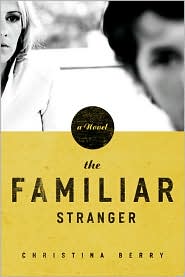
All of my friend's suggestions for this month's read were appealing, but the description of Ms. Berry's book (from Amazon.com) definitely intrigued me:
Craig Littleton's decision to end his marriage would shock his wife, Denise . . . if she knew what he was up to. When an accident lands Craig in the ICU, with fuzzy memories of his own life and plans, Denise rushes to his side, ready to care for him.
They embark on a quest to help Craig remember who he is and, in the process, they discover dark secrets. An affair? An emptied bank account? A hidden identity? An illegitimate child?
But what will she do when she realizes he's not the man she thought he was? Is this trauma a blessing in disguise, a chance for a fresh start? Or will his secrets destroy the life they built together?
They embark on a quest to help Craig remember who he is and, in the process, they discover dark secrets. An affair? An emptied bank account? A hidden identity? An illegitimate child?
But what will she do when she realizes he's not the man she thought he was? Is this trauma a blessing in disguise, a chance for a fresh start? Or will his secrets destroy the life they built together?
I love the mysterious concept, and the opportunity to have an author speak with us about her work provided an exciting prospect. I think most of the active participants in our group agreed, and I ordered my copy of The Familiar Stranger by Christina Berry.
Since I had a deadline to finish this one, I set aside the other novel I had started and dove in. The story captivated me right from the beginning, Chapter One being divided into a His and Hers narrative of the same scene from the husband and then the wife's perspective. The entire novel then follows this scheme of alternating point of view, but since the man suffers from amnesia after the accident, the truth is always just out of the reader's reach. The action proceeds swiftly, so I had a hard time closing the book that first night.
The next day, I arrived early to pick up my daughter from school and decided to sneak in a few pages on a nearby bench. One of my friends who is also in the book club noticed me and asked how I was liking the book so far. I answered honestly that I found the story rather absorbing.
Her response went something like this: "Yeah...it's okay. I've only read a couple of chapters, but all the God stuff bugs me."
Huh? I sifted through my recollection of the seven or eight chapters I had read to look for any weird religious significance or hidden messages. I knew that the central characters were church-goin' folk, as the initial conflict arises from the husband's confession that he will be skipping church to go hiking in the Gorge (although we are privy to enough of his thoughts to know that is not his actual plan). I vaguely recalled italicized phrases meant to convey the female character's internal prayers to God, but I was sure those didn't start until later in the book. Based on previous hints and discussions with this particular friend, I think my notions of spirituality are quite similar to hers. But any religious implications encountered so far I had only attributed to situational relevance or character development.
Hesitantly, I explained my perspective, wondering if my acuity had failed amidst the gripping storyline. My friend announced that the novel was written by a Christian author, and felt that her intended audience was obvious.
I personally reflected on the Twilight series, a well-known collection of vampire romance fiction written by a Mormon. My husband (who read the entire series before I even started it--and I love that) sometimes tried to draw associations between Stephenie Meyer's plot choices and her religious affiliation. But I personally consider his accusations (for lack of a better word) to be a stretch. I found the Twilight series dark and sexy and gritty, and while yes, the author deliberately created a scenario in which the primary duo resisted their very apparent sexual urges until after marriage, I did not find her means to that end unnatural for the story or morally condemning.
So I think it is possible to read the words on the page with a bias strong enough to assume a hidden meaning. Looking back over the first two chapters, I don't see any prayers or overtly Christian messages. The family is getting ready for church, but again, I didn't think twice about that being any major influence in the story beyond setting the scene of the action. Nothing in any descriptions I read, or anywhere on the cover indicated that this book was written for Christian readers specifically.
After the conversation with my friend, these glimpses of spiritual significance appeared on the pages in what seemed to be increasing frequency. At first I was annoyed that I had talked with her about it, believing that if I hadn't been aware of the implied religious affiliation, I could have continued blissfully engrossed in the story without a second thought to any hidden messages. But the little italic prayers and allusions to churchly goodness began to gradually saturate the text. My assumption that a heightened awareness falsely generated that impression began to lack sustainment and I realized that I certainly would have figured it out on my own.
I can imagine reading along in this adulterous tale of betrayal, coming to this passage:
"Jesus is with me...all this time." Samantha wove the tissue through her fingers. "When Dad would have to leave...when he couldn't be with me...he'd pray and ask Jesus to hold my hand."
How could a teenager possess such great faith? I had my health, my husband was recovering his, we had a home and family and friends...and still I questioned whether the Lord was with me or not. Still, I felt alone. Still, I felt the need to misrepresent myself to Samantha, to lie, to manipulate the situation so I could feel in control of my fate.
Lord, give me faith like a child. Let me reach out and trust You to hold my hand.
And it goes ON like this. I would shut the book on my lap. Stare at the ceiling. And think to myself, "What the hell is this?" But I would keep reading because the plot was just thickening then. And because although I don't necessarily subscribe to precisely the same beliefs as these characters or this author, I choose to respect them as I hope they would me. All over the world there are different words for and images of "God" and "prayer" and "church." Sure, if I had known this book was a piece of Christian fiction, as freshly confirmed by other friends in the know, I might not have picked it up on my own. But it was a fun book to read in spite of a few eye-rolling moments of pious virtue.
I also want to add that Portland-area landmarks make heavy appearances in the novel, and it was really fun to read a story with authentic images of the Multnomah Falls bridge and I-5 traffic to form the backdrop of many scenes.
I will go to this book discussion, and might respectfully ask how she thinks secular readers would respond to the evident religious nature of the book, or if marketing to that segment of the population is even of any concern. But I promise to zip my lips about the rest.
Saturday, March 7, 2009
Finally, musings on the Twilight Saga
I finished the four novels which comprise Stephenie Meyer's Twilight saga over a month ago, but I'm just getting around to sharing my impressions. And a few random impressions is all this will be, because I just don't feel like writing a book report suitable for English 302: Literary Analysis and Thematic Deconstruction. I'm not going to provide many examples to support any of my positions, either. The appropriate thing to say might be that I don't want to spoil anything for those who haven't yet read the series. The honest thing to say is that I don't own a copy of the book, and it has been too long for me to remember some of those specifics. We are talking about YA novels here, so perhaps my ramblings would be fit for Sophomore English.
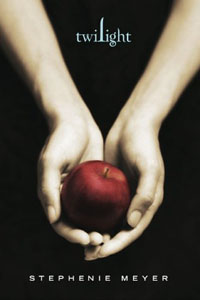
In general the Twilight series was, for me, an excellent re-introduction to the world of reading because it was fun, creative, and drew me into the fantasy entirely. For many, many months I listened to hype from family and friends and the internet (and my own husband) before I decided to give it a shot. My original avoidance was due mainly to the fact that I just wasn't reading anything. But also, like many who initially resisted or have yet to read this series, I tended to condescendingly balk at the idea of a "vampire love story." Now it seems entirely inadequate to describe the tale with a label so superficial. The story and the writing may not have been perfect, but I thoroughly enjoyed the fantasy. I do not regret in the least that I waited to begin until the series was released in its entirety. I simply walked to my sister's house next door to trade one finished book for the next, never being forced to endure the agonizing wait for each sequel.
A minor grievance of mine, completely unrelated to the story itself, is the poor editing. I was shocked at the number of typos throughout the books, and it got progressively worse. During New Moon I lost count around 18 errors, and since I am a slow, deliberate reader, the interruptions were distracting. On the other hand, I felt that Stephenie Meyer's writing improved over the course of the series. While reading Twilight, I recall thinking to myself, "If only I could come up with a great idea like this, I know I could write it just as skillfully." But after another 1500 or so pages, I've been convinced otherwise. The author did a tremendous job of weaving the numerous storylines together, and her capacity for descriptive narrative expanded a great deal after the first book.
There are a few exceptions to this analysis, however. The most glaring in my opinion being excessive repetition of specific diction. Certain phrasing and word selections appeared over and over in the text, which annoyed me. Probably because my seventh grade English teacher honed in on repetitive writing, and taught me how to make use of a thesaurus. Perhaps in approximately 2800 pages of novel, duplication simply cannot be circumvented.
My husband usually predicts outcomes to movies with surprise endings within the first 20 minutes, while I am left to cluelessly enjoy the illusion. I am plainly not one who attempts to unravel a story's mystery before it unfolds as intended. A few too many times, pieces of the Twilight story that I sensed were supposed to be shocking plot twists were obvious to me before the intended moment. When it happened, the meticulous foreshadowing and double-entendres which paved the way for said shocking moment lost their effect as I incredulously waited for the clueless characters to wise up as I had.
I am glad I watched the movie of Twilight first. This allowed me to appreciate the film on its own merits, rather than viewing it through the lens of my own hopes and fabricated images. Also, my brain doesn't transfer descriptions of people and places into visual imagery very well, so I loved having faces and settings to picture while reading. I liked most of the casting choices, except now after having read the author's very detailed descriptions, I can say that Alice should have been far more dainty, and the actress portraying Rosalie was definitely not the picture of goddess-like flawlessness that Meyer intended.
Speaking of detailed character descriptions, we got it. Edward is a statuesque model of perfection. I would have preferred a little less of Bella's swooning for his impeccable physical features, ad nauseum. The constant reiteration of this particular premise left me feeling like the author believes me to be an idiot, since she felt that I wouldn't fully grasp the concept the first 63 times it was described.
Edward is an amazing character, however, and if you haven't read Stephenie Meyer's partial draft of Midnight Sun, then you have not fully experienced the Twilight Saga. This draft apparently began as a character development exercise, where Meyer wrote Twilight from Edward's first-person narrative. Personally, I'd love to read the entire series from his perspective, because Edward is a stronger character than Bella, and his perception and internal monologue is even more interesting than the love-struck teenage girl's, in my opinion. This version offers a new layer of depth to the story, opening a perspective that was closed throughout Twilight. It was such an interesting, entertaining break to read the story through Jacob's hilarious perspective in Breaking Dawn. If you thought that was refreshing, then you must read Edward's version of Twilight.
I commend the author for developing such a solid premise on which to build her fantasy. She expertly reveals the history and character connections only through story development instead of expositioning us to death. Nothing ruins good fiction more than a bunch of here's who's who and what's what.
New Moon was easily my least favorite book. I wouldn't quite go so far as to say it was merely a necessary evil, but close. Of course having finished the two subsequent books, I completely understand what the author had to portray and why. But the extent to which Bella allowed herself to be destroyed actually weakened my perception of her character more than I believe was necessary to convey the message, and probably more than was intended. It becomes clear later why the relationship between Jacob and Bella had to be developed to the degree that it was, but I believe it could have been done in about 150 less pages. I actually allowed myself to flip toward the back of the book to make sure that Edward's name did actually reappear in the text at some point.
I realize I have listed more criticisms than accolades, which might leave you with the impression that I wasn't very happy with Twilight. In truth, this combination of minute faults doesn't overshadow the bliss I enjoyed reading a purely fun, interesting, suspenseful, romantic thriller. The development of each and every character was as absolute as the relationships between them were intricate. I definitely hated the name Renesmee, but its cheesy origin was probably the only aspect I would deem lame in an entire four-part saga concerning vampires and werewolves falling love with humans in the Pacific Northwest.
Tuesday, February 24, 2009
End of literary hiatus
I have figured out why I all but ceased reading for a few years. I used to enjoy literature, never finding enough time to delve into all which piqued my interest.
My husband is an avid reader, and when I met him his literary choices featured spiritual and philosophical ideologies that were then beyond me. He was very excited about the concepts because, he explained, they echoed his own perception and beliefs that he couldn't put into the right words. Knowing I was seeking answers to life's great questions at the time, he enthusiastically encouraged me to take on some of the books in his library, such as The Power of Myth: an interview with mythologist Joseph Campbell, The Televisionary Oracle by Rob Brezsny, and anything by Doctors David R. Hawkins or Wayne W. Dyer. I started several, but finished none. It is not that the subject matter itself isn't interesting, I just wasn't in a place to appreciate it.
Sitting in the shadow cast by a pile of books that Gary lovingly nudged in my direction, I began to regard reading as more of a chore than a pleasure. Again, not because these books were inherently boring, but rather that my mind wasn't presently open to their messages. Feeling obligated to read these particular selections made me drift away from a desire to read at all, lest my darling notice a NYT bestselling paperback in my hand while any of these great philosophical works lay idle on the nightstand.
My literary hiatus began this way, but continued as my schedule became increasingly full, and free time increasingly uncommon. When Gary realized I wasn't as interested in the types of books that he was, he quickly relaxed any attempts to persuade me. But by this time, I was not only extraordinarily busy, but had also lost a certain connection with the written word. Any remaining interest I had in reading was feeble.
Over the past 6 years or so, I read a handful of books concerning childbirth (both preparatory and investigatory), a baby name book (yeah, I read it from cover-to-cover; it's an obsessive-compulsive thing, I guess), and some inpirational (or intended as such) business/leadership volumes. I can't even recall the most recent work of fiction I read prior to last month.
My latent interest in reading recently resurfaced. I decided that I can make time to read, and made a renewed commitment to do so more this year. I'm off to a great start--in the middle of my fifth book of 2008 (Bridget's probably finished twelve by now, but who's counting?). Of course, the first four on my list comprise Stephenie Meyer's Twilight saga, which you may have heard of (especially if you are or know anyone who is Mormon). Yes, Bridget, I will be posting a collection of my thoughts on the series. Soon.
Now I am thoroughly enjoying Why We Buy, a very entertaining bit of scientific analysis of our shopping culture. My dad randomly passed this book along to me, and since I was in need of a new book to take on a short trip, I accepted it despite the fact I wouldn't have ever chosen it off a shelf. Probably because I would have assumed the same as my friend who, upon seeing the title, thought it was a book about (and condemning, I presume she meant) our societal "consumerism." Such a finger-wagging at capitalism would never interest me, but Why We Buy could be considered the antithesis to such a book: written by a man who runs a company which covertly observes and analyzes minuscule movements and reactions of shopping humans, with the goal of aiding merchants in the quest to provide a more shopper-friendly (and therefore more profitable) store environment.
While the subject is fascinating to me, it is certainly not as gripping as the vampire fantasy. In the time it has taken me to get through half of this 300-page book, I had probably completed the first two of Meyer's 600-some-page novels. Hers were demanding stories: meaning if I was faced with the option of either cracking open Eclipse or working on a very necessary, deadline-driven project for my business, I might have to physically restrain myself to the desk in an effort to avoid choosing the former. Since I can emotionally handle putting down my current non-fiction selection, I believe my books-per-month ratio will drastically decline from here forward.
But at least my brain is back in the reading game at last. Meyer may be a far cry from Dyer, but I can appreciate them both.
My husband is an avid reader, and when I met him his literary choices featured spiritual and philosophical ideologies that were then beyond me. He was very excited about the concepts because, he explained, they echoed his own perception and beliefs that he couldn't put into the right words. Knowing I was seeking answers to life's great questions at the time, he enthusiastically encouraged me to take on some of the books in his library, such as The Power of Myth: an interview with mythologist Joseph Campbell, The Televisionary Oracle by Rob Brezsny, and anything by Doctors David R. Hawkins or Wayne W. Dyer. I started several, but finished none. It is not that the subject matter itself isn't interesting, I just wasn't in a place to appreciate it.
Sitting in the shadow cast by a pile of books that Gary lovingly nudged in my direction, I began to regard reading as more of a chore than a pleasure. Again, not because these books were inherently boring, but rather that my mind wasn't presently open to their messages. Feeling obligated to read these particular selections made me drift away from a desire to read at all, lest my darling notice a NYT bestselling paperback in my hand while any of these great philosophical works lay idle on the nightstand.
My literary hiatus began this way, but continued as my schedule became increasingly full, and free time increasingly uncommon. When Gary realized I wasn't as interested in the types of books that he was, he quickly relaxed any attempts to persuade me. But by this time, I was not only extraordinarily busy, but had also lost a certain connection with the written word. Any remaining interest I had in reading was feeble.
Over the past 6 years or so, I read a handful of books concerning childbirth (both preparatory and investigatory), a baby name book (yeah, I read it from cover-to-cover; it's an obsessive-compulsive thing, I guess), and some inpirational (or intended as such) business/leadership volumes. I can't even recall the most recent work of fiction I read prior to last month.
My latent interest in reading recently resurfaced. I decided that I can make time to read, and made a renewed commitment to do so more this year. I'm off to a great start--in the middle of my fifth book of 2008 (Bridget's probably finished twelve by now, but who's counting?). Of course, the first four on my list comprise Stephenie Meyer's Twilight saga, which you may have heard of (especially if you are or know anyone who is Mormon). Yes, Bridget, I will be posting a collection of my thoughts on the series. Soon.
Now I am thoroughly enjoying Why We Buy, a very entertaining bit of scientific analysis of our shopping culture. My dad randomly passed this book along to me, and since I was in need of a new book to take on a short trip, I accepted it despite the fact I wouldn't have ever chosen it off a shelf. Probably because I would have assumed the same as my friend who, upon seeing the title, thought it was a book about (and condemning, I presume she meant) our societal "consumerism." Such a finger-wagging at capitalism would never interest me, but Why We Buy could be considered the antithesis to such a book: written by a man who runs a company which covertly observes and analyzes minuscule movements and reactions of shopping humans, with the goal of aiding merchants in the quest to provide a more shopper-friendly (and therefore more profitable) store environment.
While the subject is fascinating to me, it is certainly not as gripping as the vampire fantasy. In the time it has taken me to get through half of this 300-page book, I had probably completed the first two of Meyer's 600-some-page novels. Hers were demanding stories: meaning if I was faced with the option of either cracking open Eclipse or working on a very necessary, deadline-driven project for my business, I might have to physically restrain myself to the desk in an effort to avoid choosing the former. Since I can emotionally handle putting down my current non-fiction selection, I believe my books-per-month ratio will drastically decline from here forward.
But at least my brain is back in the reading game at last. Meyer may be a far cry from Dyer, but I can appreciate them both.
Subscribe to:
Posts (Atom)
LinkWithin
